Flatbread at the Table: Why Shape Follows the Meal
A flatbread’s shape is not just a matter of tradition or appearance. It can make a meal easier to scoop, wrap, tear, or share.
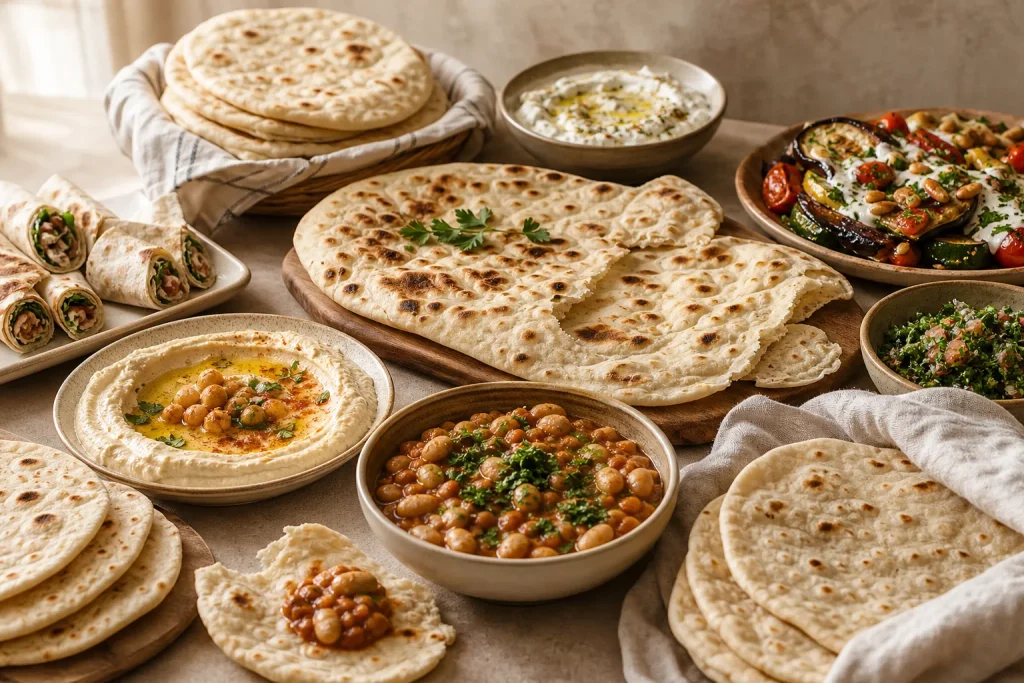
The common mistake is to choose a flatbread shape before deciding how it will be eaten. A broad, stiff round beside a bowl of loose stew may be awkward to tear and dip; a soft, flexible sheet can do the work better. Shape matters at the table because it guides the hand, and a mismatch can turn an easy meal into a string of small inconveniences.
Think of the bread as part of the serving method. Will someone fold it around a filling, scoop up a sauce, tear off pieces for the center of the table, or use it as a base? Those actions suggest different thicknesses and sizes, even when the dough itself is simple.
Make the bread fit the hand’s job
A flatbread meant for scooping benefits from a surface that can bend without cracking and an edge that is easy to grip. A soft wheat roti, for instance, can fold slightly around a bite of dal or vegetables. Keep it supple after cooking by stacking the breads under a clean towel rather than leaving them exposed to air.
For a wrap, flexibility matters more than a dramatic puff or crisp edge. Roll the dough evenly so the center and rim cook at a similar pace. A thick center may feel substantial at first, but it can make the finished bread hard to fold. If the filling is juicy, a slightly firmer surface can help the bread hold its shape; a quick turn in a hot skillet gives the outside light color without drying the whole round.
For a shared meal, tearing is often the main action. A large, soft flatbread can sit in the middle, with diners pulling off pieces as needed. The bread need not be perfectly circular. A relaxed oval or uneven round is still useful if it cooks through and has no brittle patches that crumble when pulled.
Let the serving dish suggest a shape
Look at the food before rolling the dough. A shallow bowl of thick hummus invites small, sturdy pieces for dipping. A platter of grilled vegetables may call for wider pieces that can carry a few ingredients at once. A pan of saucy beans suggests bread that is tender enough to tear and strong enough to scoop without dissolving immediately.
Thin rounds suit quick cooking and frequent passing. They stack neatly, and each person can take one without reaching across the dish. Longer oblongs can be convenient beside a narrow serving board or alongside skewers. Small rounds work well when the meal is built from several shared dishes, since diners can take a piece without committing to a full-size bread.
Shape can also keep a serving tidy. Imagine you are setting out a bowl of roasted eggplant, chopped herbs, and thick yogurt for a small gathering. If you roll one large, flexible oval, it can be torn into pieces and passed around; the expected result is fewer loose toppings falling from overloaded individual wraps. If guests need a portable bite instead, divide the dough into smaller rounds and offer the filling separately so each person can assemble one as needed.
Match thickness to the filling
Thin bread is handy when the filling is light and the bread needs to fold. But thinness alone does not make a good wrap. Roll the center evenly, and avoid leaving a paper-thin edge that dries before the middle cooks. A soft, even round folds more cleanly than one with a fragile rim and a dense center.
For scooping, a little more body can be useful. A bread with some chew will carry a spoonful of beans or a smear of dip. It should still tear readily. If it feels tough, the likely remedy is not simply to make it thicker; check whether the dough was rolled unevenly or cooked until too dry.
When the bread serves as a base, a broader shape can support a layer of toppings. Press the dough out by hand, leaving a modest rim if you want a raised edge. That border gives the food a place to rest, though it should not become so thick that it stays doughy while the middle finishes. A flatbread topped before baking also asks for a different balance from one served plain: use a surface that can bear the toppings without turning limp.
Choose the cooking method for the shape
A skillet is well suited to small and medium rounds. The dough meets the hot surface directly, so even rolling helps avoid pale, undercooked patches. Turn the bread when the first side has set and developed spots of color. If the skillet is too cool, the bread can dry before it browns; if it is overly hot, the outside may darken while the center remains raw.
A baking stone or steel can accommodate larger pieces, especially when the flatbread is intended as a shared base. Transfer the dough carefully so it does not stretch into an accidental narrow shape. A sheet pan is less dramatic but can be easier to manage for an irregular oval or a topped bread. Brush the pan lightly if sticking is a concern, and leave room for the dough to expand.
Some breads are shaped to puff and separate into layers; others stay flat and flexible. Do not force one result from every dough. If the meal needs pockets, roll and cook the bread in a way that encourages an even puff. If it needs a tender scoop, a little blistering is enough. The table’s needs should guide the form, but the dough’s character still sets limits.
Keep the bread easy to pass and eat
Fresh flatbread can become stiff as it cools in open air. Stack cooked pieces and cover them with a towel, or keep them in a covered container once they are no longer steaming heavily. For a shared meal, place the stack near the dishes it is meant to accompany. A perfect bread at the far end of the table is less useful than a modest one within easy reach.
Cutting is optional. A large round can be left whole for tearing, while a platter of dips may benefit from wedges or short strips. Cut only as much as the serving setup calls for. Small pieces are easier to dip but can dry faster, so keep them covered until the meal begins.
There is little value in chasing exact symmetry when the bread is made for tearing. A ruler, elaborate templates, or repeated trimming can consume time without making dinner easier. Spend that attention on even thickness, a properly heated cooking surface, and a shape that suits the dish.
Let one meal make the decision
Before mixing dough, name the bread’s job in a few plain words: scoop, wrap, share, or carry toppings. Then choose a size and thickness that support that action. A soft small round may be right for individual wraps; a broad oval may be better for dipping and passing; a slightly firmer, wider base can hold a layer of vegetables.
That choice need not become a rule for every meal. The same dough can be divided differently on another day. What matters is noticing how people reach for the bread, where it sits beside the food, and what happens when they tear or fold it. Those ordinary table details are often enough to tell you what shape to make next time.