The Grain Behind the Flour Label
A flour bag can tell you more than its protein number. Read the grain, milling, and freshness details together, then use a practical routine to choose flour that suits the bread you want to make.
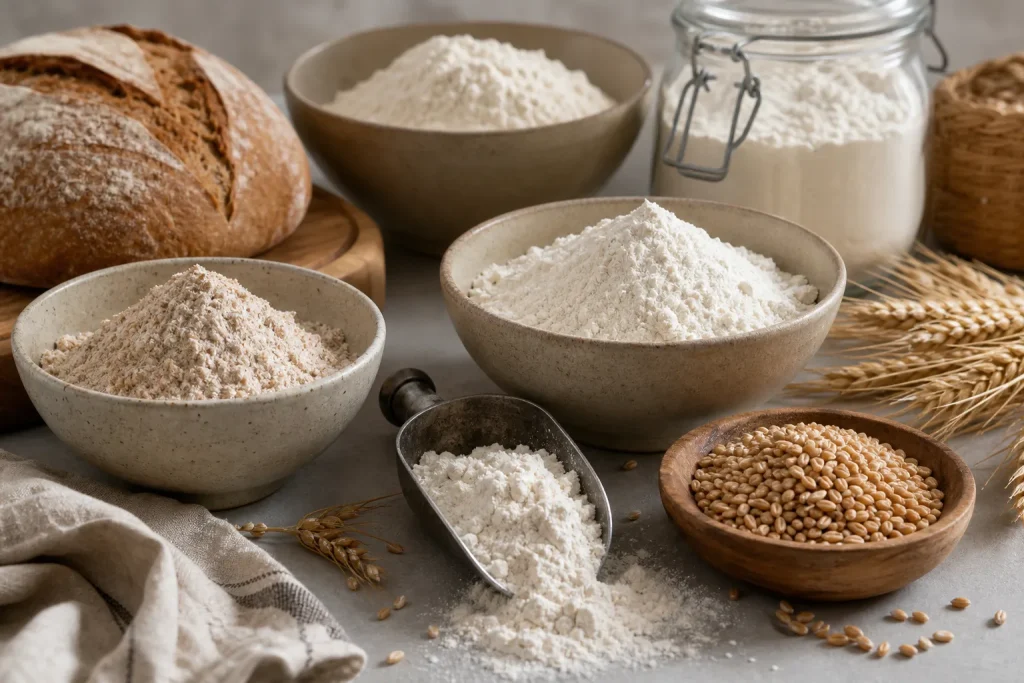
The common mistake is choosing flour by the largest number on the front of the bag and ignoring the rest. The result can be dough that absorbs water differently or bread with a flavor you did not expect. A label offers clues, not a complete prediction: grain, milling, ingredients, and storage all matter.
Grain names offer clues, not guarantees
“Wheat flour” is broad. A more specific label may name hard red wheat, hard white wheat, soft wheat, or a blend. These terms identify wheat types, but they do not determine the flour’s behavior on their own. Growing conditions, milling, blending, and the recipe’s method can all contribute to differences between bags.
Hard wheat is commonly used for bread flour, while soft wheat is often used for cakes and pastries. These are tendencies rather than fixed rules. The flour’s intended use and the rest of its label offer useful context.
Red and white refer to the color of the wheat’s bran layer, not whether the flour is whole grain. Red wheat may have a more pronounced flavor, while white wheat may taste milder, but flavor varies by product and by how the flour is milled. Either type can be sold as whole-grain or refined flour.
For a lean loaf where wheat flavor matters, the named variety may help you choose. For a soft sandwich loaf, you may prefer a flour whose flavor is less prominent alongside fillings. If the label says only “wheat,” treat that as limited information rather than inferring a specific variety.
Read the ingredients and claims together
The ingredient list can clarify whether the bag contains flour alone or includes additions. A short list may name whole-wheat flour or refined wheat flour; another may also list malted barley flour, ascorbic acid, enzymes, or other ingredients. Their use and effects can vary, so follow the recipe and consider whether the additions fit your preferences.
Enriched flour is not the same as whole-grain flour. Enrichment adds specified nutrients to refined flour; it does not restore the bran and germ removed during refining. If you want whole grain, look for an explicit whole-wheat or whole-grain ingredient name. Front-of-package phrases such as “made with whole grains” may describe a product containing both whole-grain and refined ingredients. Label terminology and requirements can vary by place, so consult the ingredient list and any applicable local labeling guidance when the distinction matters.
“Bleached” and “unbleached” describe treatment of refined flour, not its protein strength. Unbleached flour may suit a bread recipe, but that word alone does not show whether the flour matches the recipe. Check its flour type and ingredients as well.
It is not worth decoding every unfamiliar technical term before buying flour. Focus on the distinctions tied to your choice: whole grain or refined, a named wheat variety when provided, and additions that matter to your recipe or preferences.
Use protein figures only for like comparisons
Protein can help you compare similar wheat flours. A higher protein figure may indicate greater potential for gluten development, but it does not describe the whole flour or predict a finished loaf by itself. Brands may calculate or report protein differently, and label conventions can vary. The figure does not tell you how much bran is present, how finely the flour was milled, or how fresh it is.
A sturdy hearth loaf may suit bread flour better than a tender biscuit or cake. In a mixed-grain loaf, whole-wheat flour brings bran and germ, which affect absorption and dough structure; refined bread flour can contribute a different balance. Recipe proportions and mixing method matter, so matching protein figures is not enough to make two unlike flours interchangeable.
Say your recipe calls for refined bread flour, and the shelf offers a white bread flour and a whole-wheat flour with similar protein figures. The white bread flour is the closer match to the recipe’s stated flour type. The whole-wheat flour contains bran and germ, which change the dough’s character. If you want its flavor, use it for only part of the flour in a first adaptation, keep the recipe’s total flour amount steady, and reserve some liquid to add as needed. The result to watch for is dough that comes together without feeling excessively stiff or loose; the matching protein figure does not settle the question.
Check what the milling terms actually tell you
Whole-grain flour contains the bran, germ, and endosperm. Refined flour is made mainly from the endosperm. That difference affects flavor, color, and dough behavior. Bran can interrupt gluten development, and whole-grain flour often absorbs water differently from refined flour; the exact effect depends on the flour and recipe.
“Stone-ground” describes a milling method, not necessarily a whole-grain result. A stone-ground flour may be sifted, so check the ingredient name and any clear whole-grain statement to understand what the package claims.
“Bolted” and “sifted” generally indicate that some bran has been removed, though the amount and resulting flour vary. If a recipe depends on whole-wheat flour, choose a product explicitly labeled as whole wheat rather than relying on a milling term alone.
Judge freshness by date, storage, and aroma
Flour’s aroma can fade during storage, and whole-grain flour may develop stale or rancid odors as its oils deteriorate. A best-by date is a useful prompt, not a direct test of freshness. If a mill date is provided, it adds context; packaging condition and storage history matter too.
At home, keep flour sealed in a clean, dry place away from heat and dampness. If you use whole-grain flour slowly, freezing it in a well-sealed, freezer-safe container can help limit exposure to air and moisture. Freezing does not make flour immune to age or poor storage. Keep the container closed while it comes back to room temperature to reduce condensation, then label it with the flour type and the date you stored it.
When opening a bag, notice the aroma. A mild, grain-like smell is ordinary; a musty or rancid odor is a reason to set the flour aside. If you are unsure whether flour is suitable to use, discard it or ask a qualified food-safety professional for guidance.
Use a short routine to choose and handle flour
These checks keep the decision practical. Each result points to a next action rather than treating any one label detail as decisive.
- Recipe match: Check whether the recipe calls for refined or whole-grain flour. If the shelf option matches, choose it; if it does not, select a closer option or adapt the recipe deliberately.
- Ingredient list: Check whether the flour is plain, blended, or includes additions. If an ingredient conflicts with your recipe or preference, choose another bag; otherwise, note it for the bake.
- Wheat variety: Check whether the label names red, white, hard, or soft wheat. If a named variety suits your flavor or recipe preference, choose it; if the label is broad, treat the variety as unknown and compare other clues.
- Protein figure: Compare figures only among similar flour types. If one bread flour better matches the recipe’s intended use, choose it; if the comparison is between unlike flours, do not use the figure alone to substitute.
- Package condition: Check for tears, dampness, or visible dirt. If the bag is damaged or contaminated, leave it and choose an intact one; if it is clean and intact, continue checking the label.
- Date and storage: Check the date and, when shown, the mill date. If the flour is past its date or its storage history is uncertain, inspect it carefully and choose a fresher option if available; if the dates and storage look reasonable, use aroma as another clue.
- Aroma at home: Smell the flour before baking. If it smells musty or rancid, set it aside and use a fresh bag; if it smells mild and grain-like, proceed while still judging the dough as it comes together.
- First bake with an unfamiliar flour: Check whether it is whole grain or otherwise different from the recipe flour. If it differs, keep the main flour amount steady and reserve some of the recipe liquid to add gradually; if it matches, follow the recipe and observe the dough’s consistency.
Imagine you have a recipe for a refined-flour sandwich loaf and find a bag of whole-wheat flour with a similar protein figure. You check the ingredient list and confirm that the flour is whole wheat, then decide not to treat it as a direct substitute. You use it for part of the recipe’s flour, keep the total flour amount unchanged, and reserve some of the liquid. As you mix, the dough feels firmer than expected, so you add the reserved liquid gradually until it gathers into a cohesive mass. You have a usable dough and a clear tradeoff: more whole-wheat character, with texture and absorption that differ from the original recipe. The protein figure alone did not answer the substitution question.
Keep the label as a record of the choice
No bag can describe every feature that matters in a home kitchen. Read the claims together: the grain name offers a clue, the ingredient list identifies what is included, protein helps with comparisons among similar flours, and the date and storage condition provide context for freshness.
Choose the closest match for the bread you plan to make, then change one thing at a time if you want to explore. If a loaf turns out denser than expected, the label may help you notice that you used whole-grain flour where the recipe called for refined flour, but it cannot identify the cause on its own. Mixing, fermentation, and baking also matter. Keep the package or note its details until the loaf is done; that small record can make your next flour choice more informed.