A Starter Without a Schedule: Keeping a Small Culture Between Bakes
A sourdough starter can fit an irregular baking life. Choose a small maintenance routine based on how often you bake, how warm your kitchen is, and how much attention you can give it.
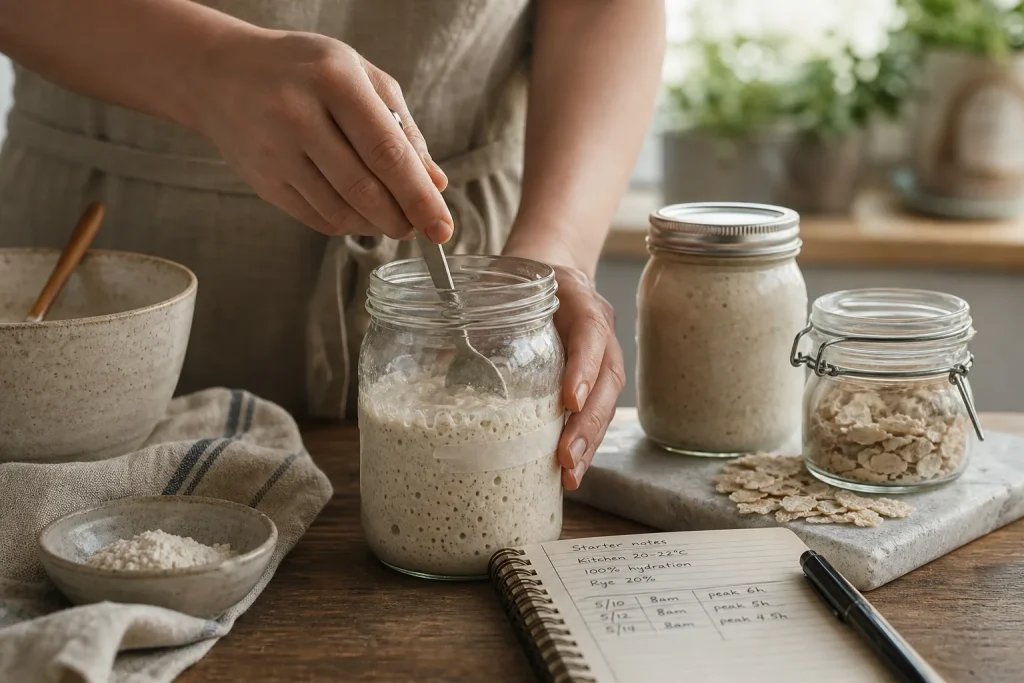
The common mistake with an irregular baking routine is treating every week as if it were the same. The cost is a jar that grows, gets discarded, and starts to feel like a household obligation. Keep a small culture and match its care to the gaps between bakes. Where it sits and when you expect to use it matter more than a perfect calendar.
Keep a counter starter only when you can feed it regularly
If you bake every few days, room-temperature maintenance can make sense. The culture stays active, but it also needs frequent feeding. A warm kitchen speeds fermentation; a cool one slows it. Watch the starter rather than treating a set interval as universal: a culture that rises and falls quickly needs attention sooner than one that remains domed and bubbly.
A clean jar, a scale, and a spoon are enough. Keep only a small portion, then feed it with fresh flour and water according to your established recipe. Mark the starter’s starting level with a piece of tape on the outside of the jar. If it rises and then falls before your next planned feeding, adjust the routine or move the jar somewhere cooler; if it remains active until then, keep the current schedule.
This option fits a baker who mixes dough regularly and can give the jar a predictable place in the kitchen. If work, travel, or family plans often leave the starter unattended for several days, refrigerate it instead of hoping it will remain ready on the counter.
Refrigerate the culture between baking days
If you bake weekly or less often, refrigeration slows activity and reduces the need for frequent feeding. Feed the culture, let fermentation begin, then cover the jar and chill it. Use a lid that keeps the starter from drying out but can be opened easily. Do not tightly seal a jar while the starter is actively fermenting; pressure can build.
Before baking, take the jar out and allow the culture to warm and show activity. If it has been sitting for a while, one refreshment may not be enough for a predictable rise. Feed it again and wait until it has expanded and looks lively before using it. Temperature and flour affect timing, so use visible change and aroma as cues rather than relying on a clock alone.
Say you plan to mix dough on Saturday and have a small jar of refrigerated starter. On Friday evening, you take it out and feed it. By Saturday morning, it is still flat and sluggish, so you feed it again and delay mixing. When it has risen and looks lively, you use it; the tradeoff is a later bake in exchange for not forcing an inactive culture into the dough.
This routine suits someone who wants to keep a culture without daily maintenance. If an unexpected bake leaves no time for refreshments, choose a recipe that can accommodate the delay rather than relying on a sluggish starter.
Dry a backup only when you need a fallback
If baking comes in bursts, you can keep a small refrigerated culture and a separate dry backup. Spread a thin layer of active starter on parchment in a clean, protected place and let it dry completely. Break the crisp flakes into a clean, dry, sealed container. Label it with the contents and date, and store it in a cool, dry place. Moisture can spoil the backup, and drying does not make a contaminated starter safe.
To revive dried starter, rehydrate a few flakes with water, then feed with flour. Continue refreshments until the culture shows consistent signs of activity. Revival takes time, and flakes are not an instant substitute for a ready starter. For long storage or questions about safe handling, follow established food-safety guidance; if the flakes become damp, moldy, or otherwise suspect, discard them.
Discard the starter or backup if you see fuzzy growth, pink or orange discoloration, or another unexpected color. Do not taste it to assess safety. A sharply sour smell or a layer of liquid alone can occur in a hungry starter, but smell and appearance cannot rule out every hazard. If you are unsure whether a culture is safe, discard it, wash the jar and utensils with hot soapy water, and start again from a sound culture.
This approach fits a baker who may go a long stretch between projects but wants a fallback. Drying a small amount takes some effort now; repeatedly drying and storing starter as a hobby is not worth the trouble. Make a backup when useful, keep it dry, and focus on the culture you intend to use.
Adjust the routine when conditions change
A starter’s pace changes with its surroundings. In a warm kitchen, it may peak and recede sooner; in a cool room, the same feed can take longer. Whole-grain rye or whole-wheat flour can change the fermentation pattern compared with a mostly white-flour feed. When you change flour or location, keep notes for a few feedings. If the starter peaks before you can tend it, keep less at room temperature or refrigerate it; if it remains sluggish after chilling, allow more time and refresh it again before mixing.
- If the starter rises and falls before the next planned feeding, reduce the amount you maintain or feed it sooner; if it remains domed and bubbly at feeding time, keep the current routine.
- If the kitchen becomes warmer and the starter peaks sooner, move it to a cooler spot or refrigerate it; if its pace remains manageable, leave its location unchanged.
- If a flour change makes the starter ferment faster, return to the previous flour or plan earlier feeding; if the pace remains suitable, continue with the new flour.
- If the starter is flat after refrigeration, refresh it and delay mixing; if it rises and looks lively, use it in the dough.
- If a liquid layer appears without suspicious growth or discoloration, stir it in or pour it off and refresh the starter; if you see mold or unexpected color, discard the culture instead.
- If the dried backup stays crisp and dry, keep it sealed in a cool, dry place; if it becomes damp, moldy, or otherwise suspect, discard it and make a new backup only from a sound culture.
- If you cannot confidently assess whether a starter or dried backup is safe, discard it and clean the equipment; if it looks and smells ordinary, remember that those checks alone cannot establish safety, so use a sound culture and proper handling.
Choose the routine you can repeat
Use room-temperature maintenance when you bake frequently and can feed the culture regularly. Refrigerate it when baking gaps are longer and you can refresh it before mixing. Keep a dry backup if your baking is sporadic enough that a refrigerated jar might be forgotten. None of these choices requires a large starter; maintaining only what you need reduces waste and makes each routine easier.
Change one part of the routine at a time. Keep the flour and jar consistent while you learn how your kitchen affects fermentation. If the starter routinely peaks before you can feed it, reduce the amount kept at room temperature or move it to the refrigerator. If it is slow after chilling, allow more time and refreshments before the next bake. A useful final precaution is to treat visual and smell checks as clues, not proof of safety: when the culture or backup seems suspect, discard it rather than trying to rescue it.