When a Dough Turns Slack: Reading Hydration Through the Mix
A slack dough is not automatically too wet. Learn how water, flour, mixing, and rest affect handling—and what to change when the dough will not hold its shape.
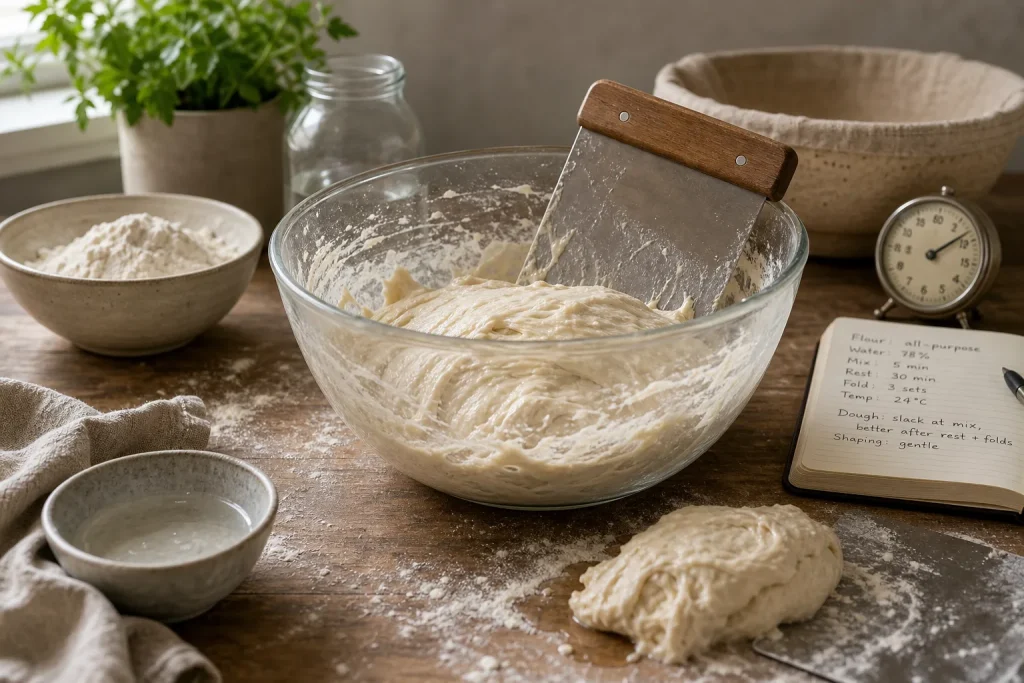
The most common mistake with slack dough is adding flour as soon as it sticks to your fingers. That can make a loaf dense or dry without fixing the real problem: the dough may need time to absorb water, more gluten development, or gentler handling. Water changes the feel of dough, but the bowl offers clues about what to do next.
What does hydration tell me about dough?
Hydration describes water in relation to flour, usually by comparing their weights. More water generally makes dough softer, stickier, and easier to stretch; less water tends to make it firmer and easier to shape. But the number alone cannot predict exactly how a dough will feel.
Flour absorbs water differently depending on its type, milling, and age. Whole wheat flour, for example, includes bran that takes up water and can interrupt a smooth gluten network. A strong bread flour may feel more elastic than a weaker all-purpose flour at a similar hydration. Salt, preferment, and other ingredients also affect handling.
So treat hydration as a useful description of a formula, not a verdict on the dough. If a familiar recipe suddenly feels loose, check whether the flour, measuring method, or mixing sequence changed before deciding to alter the water.
Why does dough feel wetter after mixing?
Dough often feels wetter at first because the flour has not yet absorbed all the water and the gluten network is still developing. A short rest can make the mass more cohesive without adding anything. This is one reason an early sticky feel is not, by itself, a reason to dust in more flour.
During mixing, flour and water come together, then repeated kneading or folds organize gluten into a structure that can hold the dough. A rough, shaggy mixture may become smoother and more elastic as it rests and develops. Conversely, vigorous mixing can warm dough, and prolonged mixing may leave some dough feeling slack or smeary.
Give the dough a pause before diagnosing it. Cover the bowl so the surface does not dry, then check whether the dough gathers more easily and stretches with less tearing. If it remains loose, consider its structure and fermentation rather than assuming water is the only cause.
How can I tell sticky dough from weak dough?
Sticky dough clings to a hand or scraper; weak dough struggles to hold together or keep a shape. A dough can be sticky yet strong enough to stretch into a thin, elastic sheet. It can also feel less sticky but tear readily because its gluten is underdeveloped.
Use a damp hand or flexible bowl scraper to handle sticky dough. Notice whether it pulls away from the bowl in one connected mass, stretches before tearing, and gathers after a fold. These signs suggest the structure is developing, even if the surface remains tacky.
Weak dough may spread into a puddle soon after being folded, tear with little resistance, or smear across the work surface instead of moving as a coherent piece. Before changing the formula, try a rest followed by a gentle set of folds. If the dough gains tension, the issue was likely development, not simply excess water.
When should I add flour or hold back water?
Add flour only when the dough is persistently unmanageable and there is a clear reason to believe the formula or measurement is off. If the dough is merely sticky, a rest, a scraper, or a light wetting of the hands is usually a better first move. Extra flour changes the balance of the recipe and can make the finished bread tighter than intended.
For a formula you are making again, adjust water gradually and record the change. Hold back a small portion of the listed water during mixing, then add it if the dough feels firm and tears rather than stretching. This makes it easier to respond to a flour that absorbs less water than expected, without committing the whole batch to a change.
Say you mix a dough with a new bag of all-purpose flour and it spreads more than usual after the first fold. You cover it, let it rest, then fold it again with a damp hand. If it now lifts as one piece and holds a loose mound, you leave the formula alone; if it still flows broadly across the bowl, you note that the flour may need less water next time. The observable change—not a guess from the first sticky moment—guides the decision.
How does fermentation make dough slack?
As fermentation proceeds, dough can become more extensible and less able to hold its shape. Gas expands within it, while acids and enzymes gradually alter its structure. A dough that was firm and elastic early on may soften as it ferments.
Look at the dough’s behavior as well as its volume. If it is airy and jiggly but still lifts in a connected mass, handle it gently and continue with the planned shaping. If it spreads quickly, feels fragile, or collapses when moved, it may have fermented too far or become weakened. For the current batch, avoid aggressive kneading; use a scraper and shape with care. Next time, consider ending fermentation earlier or handling the dough more gently.
Warm conditions can speed fermentation, so a timing plan that works in a cool kitchen may not fit a warmer one. Judge the dough itself rather than relying only on the clock.
Which handling changes help a wet dough?
Use tools and movements that build structure without burying the dough in flour. A flexible bowl scraper can loosen the sides, while wet or lightly oiled hands reduce sticking during folds. A damp countertop can be easier to work on than a heavily floured one, which can incorporate dry patches into the dough.
For shaping, create surface tension with a bench scraper and a few controlled movements. Work decisively, then let the dough rest if it keeps springing back or smearing. Repeatedly dragging it through flour may make the outside manageable while leaving the interior uneven.
Not worth the effort: trying to make every dough feel dry and tidy. Some doughs are meant to be tacky, and repeated flouring can hide useful signs of gluten development. Aim for a mass you can handle with a consistent method, not a dough that never sticks.
What should I change the next time the dough is slack?
Change one variable at a time. Record the flour, water, mixing method, rest, and fermentation conditions, then note what the dough did at mixing, folding, and shaping. That short record helps distinguish a formula issue from a timing or handling issue.
If the dough was slack from the beginning and stayed weak after resting and folding, reduce the water slightly in the next batch or use a flour better suited to the loaf. If it began strong but loosened late, look first at fermentation and handling. If it was sticky but became cohesive after a rest, keep the water and adjust your process instead.
Keep the next change modest and observe the result at the same stages. Dough gives clearer answers when you compare its behavior over time, rather than asking one sticky handful to explain the whole formula.